
Enable Civil Resistance Now
To organize long-term resistance, we need your support!
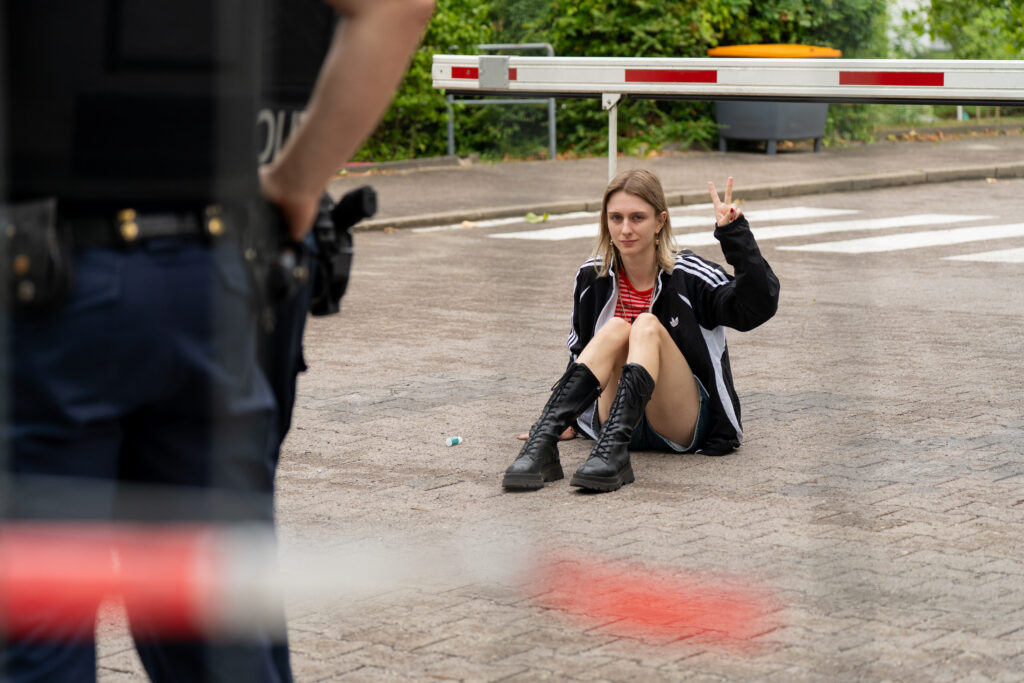
In the fall of 2026, the Israeli military continues to bomb civilians in Gaza and Lebanon. In the West Bank, extremist settlers, backed by the military, are targeting their Palestinian neighbors. Israeli occupation forces are destroying homes, cutting down olive trees, destroying people’s livelihoods, and robbing them of any hope of returning.
While the Israeli state is actively wiping out Palestinian lives, Israeli Minister of National Security Itamar Ben-Gvir is gushing about his desire to expand the killings in Gaza. He also shared an AI-generated video on social media showing Palestinian prisoners being transported on a conveyor belt to a concentration camp
. Nevertheless, it remains controversial in Germany to use the term “genocide” in this context.
Even the most recently elected representatives of a supposedly pro-Palestinian left—some of whom ran on the promise of taking a clear stance on Palestine—often fail to take a clear stand in the capital against a national policy that condones and supports Israel’s crimes.
Meanwhile, renovations are in full swing at the Rheinmetall Waffe Munition GmbH facility in Berlin’s Gesundbrunnen district. On its website, the company announces that production will begin in mid-2026: It plans to manufacture components for 155-mm artillery ammunition and warhead components for loitering munitions. For the latter, the company has been collaborating with the Israeli firm UVision since 2021. UVision’s HERO loitering munitions—a category of combat and “suicide drones”—are marketed as “battle-tested” due to their use in the Gaza Strip and southern Lebanon.
Rheinmetall itself acknowledges that weapons can be misused worldwide to violate human rights and breach international humanitarian law. In the same article on arms export regulations, Rheinmetall’s in-house magazine, *
*, conjures up a simplistic, childish image of “Somali paramilitaries, Islamist terrorist groups, or pirates off the coast of Nigeria.” At the same time, in a press release dated September 14, 2026, the company boasts that it has been commissioned by an international customer to supply artillery shells worth a low three-digit million-euro amount.
According to an analysis, Israel fired more than 90,000 artillery shells at the Gaza Strip during the first seven weeks of the Gaza war; Amnesty also documented the use of 155-mm white phosphorus shells in densely populated areas. The use of white phosphorus in such areas may constitute indiscriminate attacks in violation of international law.
Rheinmetall warns against the misuse of weapons by others, while the company itself is reaping record profits from the production and delivery of such artillery ammunition.
In light of the lack of principled stances among political parties and the hypocritical double standards of private-sector war profiteers, the question becomes all the more urgent for us: Do we want to accept this in silence and abandon the victims of this inhumane economic system? Or do we stand up against the crimes committed by states and arms companies?
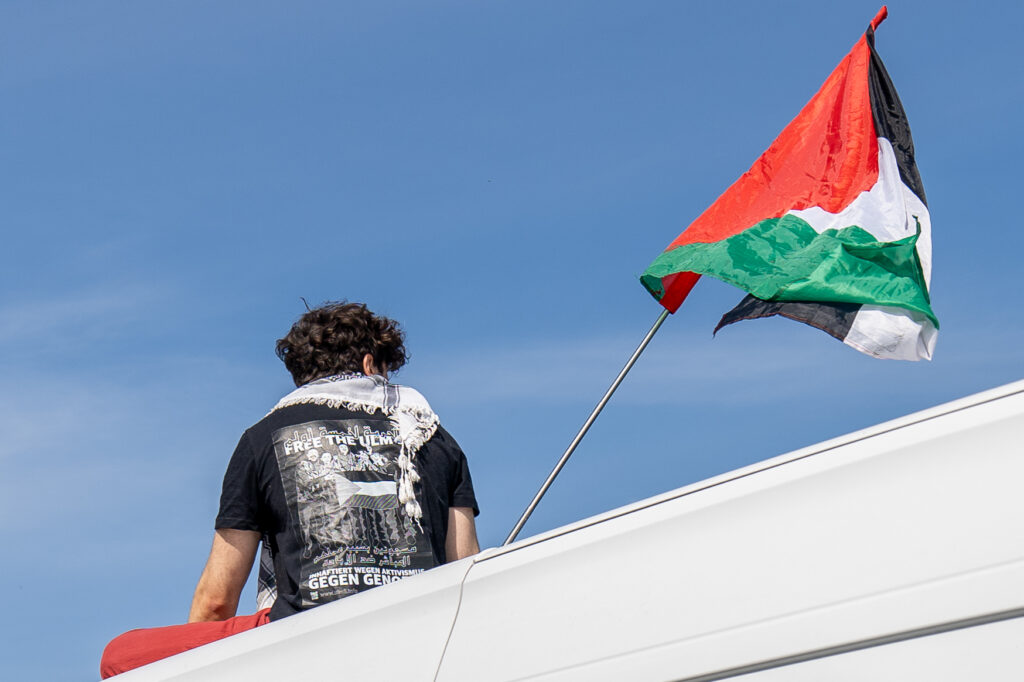
We've made our decision.
Since March, we have been protesting against Rheinmetall’s new arms production facility in Berlin and across Germany. We are taking responsibility and standing up against an industry that makes war possible—even right where we live.
We're deciding now what happens next in Berlin
Will arms production in Gesundbrunnen become the new normal, or will we mount determined civil resistance? From November 15 to 22, let’s protest together and stand up to Rheinmetall’s production—are you in?
We want to disrupt production through nonviolent civil resistance. To do this, we need people to get involved and a reliable infrastructure that makes protest possible even beyond individual days of action.
Support our days of protest
- Logistics, Accommodations, and Food at Protests
- Legal Advice
- Protest materials
- Travel Expenses
- Campaign materials, such as flyers and posters
- Spaces for lectures, training sessions, and support during periods of protest
- Support for people who organize resistance and, as a result, are unable to engage in wage labor